Resources
How to avoid costly downtime in bucket elevators with the right conveyor belt
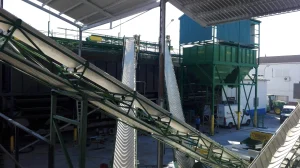
In many industries, there are components that quite literally keep the operation running — and are also visible to everyone. Bucket elevator belts are a clear example: in many installations they exceed 50 meters in height, making them as visible as they are critical in sectors such as food processing and cement.
Choosing between textile or steel belts is not just a matter of preference: it is a technical decision that directly impacts the safety, efficiency, and service life of the entire installation. It is not only about durability, but also about avoiding production downtime caused by choosing the wrong belt.
Why is it so important to pay attention to the belt?
Because a bucket elevator does not allow mistakes. It runs continuously, supports constant loads, and often operates in demanding conditions such as temperature, humidity, or corrosive products. A belt failure, especially at great heights, can cause unplanned shutdowns, financial losses, and even significant operational risks.
Key factors that make the difference
- ✔️ Belt strength calculation. It is not enough to choose a “robust” belt. It must be properly sized according to the load, elevator height, speed, and operating conditions. An inadequate calculation can lead to elongation, breakage, or premature fatigue.
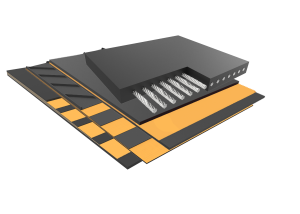
- ✔️ Material quality (textile or steel). Textile belts stand out for their flexibility and light weight, while steel belts offer greater resistance in extreme environments. In both cases, the quality of the rubber or base material is decisive in ensuring durability.
- ✔️ Precise drilling. A frequently underestimated aspect. Poor drilling can create stress points, misalignment, and structural failures. Precision in this process is key to ensuring proper bucket fastening and an even distribution of forces.
- ✔️ The importance of the splice clamp. Just as important as the belt itself. The choice of the right splice clamp and its correct installation directly affect system reliability. A low-quality or poorly installed clamp can become the weak point of the entire installation.
Conclusion
When we talk about bucket elevators, we are not talking about a simple component: we are talking about a critical system that works vertically, often at great height, where every detail matters. Investing in the right belt, properly calculated and correctly installed, not only improves performance but also prevents bigger problems. In these installations, reliability is not an option — it is a necessity.